Monday, 20 March 2023

Is The Erdoǧan Era in Turkey Drawing To A Close? Maybe. Maybe Not.


Maybe, just maybe, after more than 20 years in power Tayyip Erdoǧan’s iron grip on the Turkish presidency could be slipping. While the opposition parties may yet find their usual way of snatching defeat from the jaws of victory, current signs indicate a major change in Turkey after the presidential and parliamentary election on May 14. The stakes are very high for both sides.

Even if the opposition wins, however, it might discover that the election was the easy part. Then what? Given the enormous domestic and international challenges facing Turkey regardless of who wins the victor will enjoy a very short ‘victory lap’ before dealing with decades of economic, administrative and judicial mismanagement.

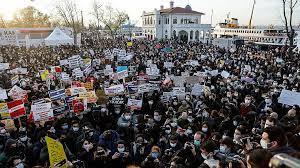
         Beset by a weak economy, high inflation, and Central Bank with only enough money for a couple of glasses of tea, Erdoǧan was already facing a restive, angry electorate before his problems were compounded by the disastrous earthquake in southeastern Turkey that claimed about 50,000 lives and destroyed hundreds of buildings. Stories of shoddy, sub-standard construction, amnesties for contractors and abysmal emergency response from the central government have fuelled growing anger and fury among key sections of the population.

     The opposition parties have for once learned something from their multiple defeats over the years. Rather than enter the elections as individual parties – none of which would ever get enough votes to topple Erdoǧan -- they have opted to form a coalition, albeit an awkward one, of six parties and unite behind a single candidate. The candidate they have chosen is long-time head of the CHP – Republican People’s Party – Kemal Kılıçdaroǧlu whose mild appearance and manner belie his surname – Son of Swordsman.

Can Kılıçdaroǧlu pull off the biggest win of his career?

    Some say the 73-year-old Kılıçdaroǧlu lacks the charisma and forceful character that draw many to Erdoǧan. Others opine that many in the country are sick and tired of Erdoǧan’s bombast and hope for quiet competence over aggressive incompetence. Whether that long-desired competence would be forthcoming with new leadership remains to be seen.

     However, and it is a huge ‘however’, one should be very careful about writing Erdoǧan’s political obituary. The political waste land is filled with people who underestimated him. He is a formidable campaigner and his party, AKP, has proven to be a well-oiled election machine. He has an intensely loyal voter base including thousands who are desperate to hang onto the positions and favours they have gained over more than two decades. The vast majority of the media is in Erdoǧan’s control, and they face financial disaster if he loses and their lucrative subsidies disappear. The security services and courts are also firmly in his hands. He will also throw vast amounts of money at key blocks of voters to keep them on his side.

One should never underestimate Erdoǧan's political skills

 In short, he has all the tools to try and bend the results in his direction. This doesn’t necessarily mean simply stuffing ballot boxes. For example, Kılıçdaroǧlu is an Alevi – a distinct type of Islam considered by some orthodox Sunni Moslems to be similar to the despised Shiites. Erdoǧan or his acolytes could fan those differences in an attempt to keep the hard-line Sunnis from voting for Kılıçdaroǧlu. There could also be a manufactured international event to keep the secular nationalists on his side. But with less than two months to go until the election Erdoǧan’s room for maneuver is beginning to shrink.

Kurds, the largest minority group in Turkey with about 15% of the population, make up the absolutely critical block of voters – literally the king makers. If they stay unified – always a question – they have the ability to swing the election to their favoured candidate. Conventional wisdom is that they will support anyone who opposes Erdoǧan and who promises to make their life a little easier. However, the opposition coalition is not united on this issue. For example, one of the coalition parties contains hard-core nationalists who tend to view the Kurds as a threat to the unity of Turkey. You can be sure that Erdoǧan will do everything in his power to fracture the opposition coalition and he is not above using the Kurds to do just that.

Selahattin Demirtaş, imprisoned leader of the Kurdish political party

 Let’s assume for a moment that the opposition wins and Kılıçdaroǧlu becomes president. A first, millions will be thrilled that Erdoǧan is gone. When that wears off things very quickly get interesting and unpredictable. The opposition coalition has promised to change the governing system from a strong president and weak parliament and return to the previous system where parliament was supreme and the president had little power. The ability of the new government to implement major changes will depend on the make-up of the new parliament and which party has the most seats. I anticipate ‘vigorous’ bargaining among the parties and a constant series of changing voting blocks depending on the legislation being considered.

 Spare some pity for the person put in charge of the economy. His in-box will be overflowing. What will he do with interest rates? How will the currency react? How, exactly, will he tame inflation without hitting living standards even more? Where will he get the money for all this economic restructuring? Will he turn to the IMF? And on, and on, and on.

 What about international relations? My guess is that there won’t be much change. Probably a little less confrontational, especially with the West. After all, that’s where most of the economic assistance could come from. But the underlying delicate balancing act with Russia will most likely continue. Who knows what Putin will do if his buddy Erdoǧan loses. He could demand immediate payment for the previously delayed gas payments. Russia is rumoured to have deposited more than $20 billion in Turkish state banks. That could be quickly withdrawn. Sweden would probably, somewhat grudgingly, be allowed to join NATO – especially if the Americans go ahead with upgrades to the F-16 fighter jets. The volume and tone of the exchanges with Greece could change. Turkey would still harbour a grudge about issues involving maritime territorial rights or exploration rights for natural gas, but the temperature of those complaints could be dialled down.

 I have followed Turkish elections for more than 30 years, and this is by far the most interesting, as well as the most important, one. The pieces of the puzzle are constantly moving and only a fool would try to predict the outcome at this point.

Friday, 24 February 2023

Will The Disastrous Turkish Earthquake Also Cause A Political Upheaval?


In addition to the thousands of personal tragedies following the recent disastrous earthquake in southeastern Turkey the catastrophe has also stripped away the carefully constructed mirage of competence and progress that President Tayyip Erdoǧan has tried to create. Laid bare in one horrible morning were the consequences of replacing the painstaking, difficult task of building solid economic and social foundations with glittering, weak façades.

Grieving father holds the hand of his deceased daughter

As we discovered in a recent trip to Istanbul, the façade is apparent the minute the plane lands. The airport is huge and filled with modern conveniences, roads leading into the city are wide (and usually jammed with cars), decaying warehouses along the old port have been replaced with super modern shopping areas and hotels with astronomic prices, a modern, clean metro system speeds you around the sprawling city and under the Bosphorus. Alas, the financial foundations of all these developments are as weak as the building foundations in the earthquake zone. Most of these projects were financed with foreign currency loans guaranteed by the Turkish government. With inflation at more than 60% and the currency steadily losing value repayment of these loans is becoming more and more difficult.

A cursory look at the country’s finances reveals a completely misleading picture. Central Bank reserves, for example, have been propped up by short-term borrowings (Swaps). Russia has deposited a large amount of foreign currency – the exact amount is unknown – into Turkish state banks. Russia has also told Turkey it can delay payment for the natural gas received from Russia. Turkey does not recognize EU or US sanctions and happily trades with Russia and Iran. All this helps in the short run. But peel away the gloss and a different picture emerges.

 Even without the horrors of the earthquake the country was in dire financial shape. Without all the short-term financing the Central Bank is left with minus, I repeat, minus $45 Billion. As if this were not bad enough the Central Bank is spending – wasting, really – up to $40 million a month in a fruitless effort to defend the Turkish Lira. The government will do everything it can to keep the Lira from spiralling out of control downward– again – before the presidential elections scheduled for this spring. On top of this already shaky foundation estimates of the economic cost of the earthquake range up to $100 billion. No one is quite sure where this money will come from. Even Erdoǧan’s new best friends in the Gulf might hesitate at giving this much.

 But the real questions – questions that will dominate the political landscape – surround the squalid construction that cost so many lives. As survivors crawled from the rubble, they blamed all the destruction on sub-standard construction. ‘Earthquakes don’t kill people. Badly built buildings do,’ was the constant refrain. Reports quickly emerged of contractors using substandard cement, substandard steel reinforcing rods, and, worst of all, building on or near well known fault lines. This picture was dramatically reinforced with pictures of properly constructed buildings that suffered little or no damage next to others that had completely collapsed.

 People are understandably furious and raising questions Erdoǧan wishes would stay buried in the rubble. He has relied on construction to fuel economic growth during his long stay in control. In return for winning projects contractors supported the ruling party and took over the vast majority of broadcast and print media in Turkey. Turkey has many zoning and construction regulations concerning building in the country’s many and well-known earthquake zones. To say these were ‘overlooked’ is putting it mildly. What is worse, and could come back to haunt Erdoǧan in the election campaign, is that this incestuous relationship with contractors was reinforced in 2018 when the government passed a comprehensive amnesty for these same contractors. (Click on this link to see a video of collapsing buildings. Since this video was taken the death toll has reached almost 45,000.)

 While it is clear that the earthquake and revelations about the government’s lax treatment of building codes will hurt Erdoǧan during the elections no one should assume that the opposition has an easy road to victory. After more than 20 years in power Erdoǧan controls every facet of Turkish government. The judiciary, security services, mass media, education, health, etc. are in his complete control. In the early years of his rule there were many qualified, hard working bureaucrats in key ministries. Over the years they have all been driven out and have been replaced with non-entities whose only qualification is complete loyalty to Erdoǧan. Their personal power might extend to ordering a cup of tea. Beyond that they won’t lift a finger before clearing it with Erdoǧan. Whatever independent thought they may have is wisely left at home.

 Despite this level of control the fact that the opposition has a real chance is a huge credit to the Turkish people and demonstrates vividly the difference between Turkey and other countries in the Middle East. Can you imagine Syria allowing independent legal teams into the earthquake zone looking for evidence of negligent construction? Not too likely. Turkey is extremely fortunate in having a large, well educated, well-travelled middle class that shows every sign of rejecting Erdoǧan’s dogmatic rule. The Turkish economy is open to the rest of the world and many of its companies span the globe. In addition to the angry middle class, many in the lower economic strata are also fed up with high inflation that makes it extremely difficult to make ends meet.

 It is much too early to predict the outcome of the presidential election that will probably take place in May or June. Despite the current anger about the earthquake Erdoǧan holds immense power and can shower favoured segments of the population with money. With votes for Erdoǧan and the opposition fairly close it seems the Kurds will be the kingmakers. The Kurdish population is about 12 – 15 million (out of a total 85 million) and if they vote in a bloc they can tip the outcome in any direction they want. While they have no reason to like Erdoǧan there is no guarantee they will vote for the opposition. There will be a lot of hard bargaining.

 As one young Turkish friend put it, ‘This is the most important election in the history of the Republic.’ I think he is right. But spare some pity for whoever wins. He will face a mammoth reconstruction job that will tax the skill and energy of everyone in Turkey.

Friday, 6 January 2023

To Really Understand America Look Beneath The Bad (Very Bad) Amateur Theatrics in Washington


Social media as well as the regular press and broadcasters are outdoing themselves in proclaiming the unbridgeable chasm in American social, cultural and political life. According to the blaring headlines the country is about to break out in yet another civil war – Red vs. Blue, Urban vs. Rural or any other opponents one can think of. How much of this hysteria is based on some semblance of reality and how much is merely overblown self-important rhetoric from observers who need to spend more time outside Washington, D.C.?

 Yes, political representation on the national level is evenly balanced between the Republicans and Democrats. That balance in and of itself is not necessarily a bad thing. And each party has its fair share of loons who forgot to take their medication. They yell and scream in front of any media outlet they can find in a vain effort to seem relevant. And the Republican agit-prop nonsense going on now as they try to elect a sane Speaker of the House only strengthens this image of total ungovernable confusion.

 And the media, for its part, is just as guilty. It loves the noise and pseudo-excitement. Instead of bothering to investigate and report on serious trends in American life they focus on the low hanging fruit of the ridiculous antics of some of our elected representatives. Just look at the front pages of national newspapers or banners screaming across many websites. Their whole focus is on superficial politics – who is gaining in the polls, which congressperson was found in unnatural acts with a goat, who is proposing that his or her opponent should take a one-way trip to Mars? And who – hold your breath – was caught in a lie? Who needs the sports pages or comics when we have this entertainment on a daily basis?

 Listen to this cacophony long enough and one can be forgiven for thinking the country is on the brink of disaster. A lot of this noise is due to what I call the ‘Trump Effect.’ Narrowly elected by the revulsion against ‘politics as usual’ Trump soon revealed the truth of the saying by journalist H.L. Mencken more than 100 years ago. ‘On some great and glorious day the plain folks of the land will reach their heart’s desire at last, and the White House will be adorned by a downright moron.’ Now it appears that the worst of the Trump effect may be passing. His faithful, the same ones who have followed every loud-mouthed huckster throughout American history, may cling to him but as we saw in the midterm elections normal Republicans are looking and voting elsewhere. There will be deeply conservative candidates in the future but most of them will not manifest the same deep personality disorders that plague Trump.

 If those Washington-obsessed observers would take the trouble to look beneath the surface they might find something interesting, counter-intuitive – the country tends to work. What the observers miss is that the American federal system means that the individual states, counties and municipalities actually control most of the things ordinary people care about – schools, public safety, transportation, public works, planning permissions, zoning. Unlike most of Europe, almost all the expenses related to those issues are raised through state and local taxes - not from the federal government. Folks in Washington can yell and scream and dominate the headlines, but if you want a road repaired or school improved you talk to local administrators. It really doesn’t matter if you’re in deep red Wyoming or electric blue Massachusetts. The local issues are pretty much the same. The solutions may vary from state-to-state but that’s the strength of the federal system. One size does not have to fit all.


Town meetings work much better than Washington

 If the UK is serious about giving the regions more power the first thing it could do is give those regions more power to raise local taxes.  The much-discussed devolution in the UK is toothless without local taxing power. I once asked the mayor of Atlanta, Georgia how much of the city’s budget comes from municipal and/or state funds. ‘More than 90%,’ he answered. We were seated next to a council member from a large English community. He sighed in envy at his Atlanta counterpart and said those figures were reversed in his town where more than 95% of funding came from the central government.

State Houses like this have as much clout as Congress

 Years ago, I covered local towns in Connecticut as a very junior reporter. I learned first-hand just how much people in those communities cared about town meetings where taxes were determined, school board meetings where difficult budget decisions were made or – most heated of all – zoning board meetings where issues like green space, industrial or commercial space were discussed often until the wee hours of the morning. No one cared that much about what happened in Washington, D.C.

 So the next time some blaring headline hollers about America coming apart at the seams just take a deep breath and find a story about local citizens coming together on a local project. Those stories don’t often make the front page, but they’re much more important and affect many more people than what passes for so-called news these days.

Sunday, 28 August 2022

Tourism Officials Must Learn That Less Is More


How much tourism is too much? There seem to be at least two different approaches. One is to invite tourists to your country to enjoy and respect what is on offer without changing your own traditions/values or risk damaging the environment  just to attract the mobs. The other approach is to attract the masses at any cost, regardless of the damage to those traditions and the very environment that makes your location attractive and unique in the first place.

Some popular destinations like Amsterdam and Venice are finally taking steps to limit the ravages of mass tourism. Amsterdam officials have gone so far as to ask tourists not to come there. Venice is levying heavy fines for bad tourist behaviour like littering, disrespecting monuments or – like two idiotic Australian tourists – taking power surfboards down the Grand Canal. Venice has fought a long battle to save its precious canals and ancient, fragile building foundations from the damage caused by enormous cruise ships that blot out the sun and dump thousands of tourists onto its narrow, twisting streets. Some of the beautiful, equally fragile Norwegian fiords have also been plagued with these cruise ships that can barely fit into narrow harbours. Fortunately the country is beginning to learn the value of just saying ‘No’ and is taking steps to limit that damage.

Tourism? Or Vandals sacking Rome -- again?

Other countries like Greece seem to have taken the attitude that there is no such thing as too many tourists munching over-priced souvlakis and cheese pies while slurping beers as they wander around some of the most precious monuments in the world. What should be moments of reflection in front of some of these monuments has turned into a cacophony of flip-flops slapping on the ancient marble, loud yells to have friends join them for yet another selfie in front of a statue, moans about the heat (didn’t anyone tell them about Athens in July), or comments about the lack of a loo in the Parthenon.

Athenian hotels now try to outdo themselves with roof-top bars blaring music (?) until dawn and making life unbearable not just for guests unfortunate enough to have rooms in the hotel but also for the hapless residents of the neighborhood who actually have to get up at a decent hour and go to work. But somehow those tax-paying residents don’t seem to count for much in the eyes of city officials. Perhaps the city will start offering them grants to leave the city in the summer and head to some remote part of the country. God forbid they should start telling tourists how to behave!

Yes, Greece has had a very difficult economy for the last several years and many people believe that mass tourism is the best solution for their difficulties. But these people fail to realize that this sort of tourism is rapidly destroying the very thing that makes places like Greece, with its beautiful sea, idyllic islands, and much-overlooked mountains so special.  

Take Mykonos -- essentially a rocky, barren island with very little water. When I first went there many years ago it was known as being sort of bohemian, attracting a lot of artists with modest talents and less money. Now it has been transformed into the party island of Greece, jammed with wannabe Eurotrash and over-priced bars that don’t open until midnight and produce ear-shattering noise that doesn’t stop until dawn. Inevitably the drug culture is never far behind. The harbour is filled with monster cruise ships waiting to disgorge unsuspecting passengers onto the overburdened island to wander around the narrow streets and buy authentic Made-in-China Greek trinkets and souvenirs. Smart passengers stay on board and order another gin-and-tonic in the comfort of an air conditioned bar. Maybe it’s not a bad idea to create an isolated spot like Mykonos – rather like the plague islands outside ancient Venice – and avoid infecting the rest of this beautiful country.

Not sure this what Odysseus had in mind

All these thoughts came to mind when my wife and I took a break from Greece and spent a delightful week in the Alsace region of France. The natural beauty – with hundreds (maybe thousands) of vineyards stretching from the lush green valley up to the foothills of the Vosges mountains – is stunning. These vines produce several delicious wines such as Riesling  and Gewürztraminer. Picturesque villages with rich history dot the area. Yes, the area is filled with tourists in August but because of the infrastructure and general attitude toward tourism in general it was not unbearable.

Beautiful Alsace

 The superb public transport system means you don’t really need a car. My wife likes nothing better than scouring local bus schedules and she quickly found frequent, inexpensive buses from Colmar to the beautiful surrounding villages. The city of Colmar also offers a free small bus service within the city limits. Restaurants and bars were full, but unlike Greece, they were not allowed to infringe on the local lifestyle. They closed at reasonable times (midnight or at the latest 1:30 am) and the noise was moderate. The overall attitude seemed to be ‘Come and enjoy what we have but don’t expect us to destroy our lifestyle or environment just to cater to bad behaviour. Take us as we are or don’t come.’ 

One wishes that Greek tourism officials would learn the lesson that less is often more. Do they really appreciate the beautiful and fragile ecosystem of their own country? Or do they think that chasing the last Euro from mass tourism is worth the destruction? Can they can develop the courage and, yes, the self-respect to discourage the worst of mass tourism that only drives away those people who really want to enjoy the culture and natural beauty of Greece? Overall tourist numbers may decline but the quality of the tourist experience – as well as the spending – will sharply increase without damaging the social or environmental fabric of the country.


Thursday, 6 January 2022

The Real Betrayal of Turkey


Among the many ways that Tayyip Erdoğan has damaged Turkey – economic collapse, corruption, perversion of the judicial system, international isolation  – perhaps the worst is the destruction of Turkey’s once promising reputation as an up-and-coming, serious country.

Now the mere mention of Turkey’s name is greeted like a loud belch in church – with withering silence and not-so-quiet questions about ‘who let him in the door.’ Turks leading successful lives abroad used to be proud of the rapid strides their homeland had made. Now they wince in embarrassment when someone recounts Erdoğan’s latest folly.

In short, he has obscured the real Turkey – a country endowed with millions of hard working and smart people, beautiful landscapes, fascinating multi-cultural, rich history stretching back to the dawn of civilization, a dynamic cultural environment, and an economy – with rational management – that can become the strongest between Germany and India. Worst of all, perhaps, are the damaged dreams of the young generation.

The young generation feels betrayed

Now, unfortunately, all this potential is obscured under the dark cloud of Erdoğan’s bizarre vision of a country beset on all sides with foreign and domestic enemies whose only perceived goal is to throw Turkey off its pre-ordained, glorious upward path paved with ever deeper layers of his beloved concrete.  That is the perverted vision that dominates news about Turkey.

Seldom has a country’s leader travelled the world as much as he has and learned so little. He has the same huge chip on his shoulder that he did growing up in one of Istanbul’s toughest neighbourhoods. Instead of profiting from the thousands of extremely well educated, well-travelled, multi-lingual business people, academics, scientists, cultural leaders and others Erdoğan regards them as enemies. Turkey used to have a very skilled, successful diplomatic service that was the envy of many countries. Now the only qualification for senior diplomatic rank seems to be loud praise for the Reis – the boss. He has notoriously thin skin and blows up at any story that doesn’t lavish the type of praise that would make even Caligula blush. No one is quite sure who, if anyone, he listens to. His circle of ‘advisers’ seems to be limited to family and utter sycophants desperately hanging on to the only job they can get.

Turkey's leading business group now a target of the president's ire

All this would be somewhat comical if it didn’t have serious ramifications. Take international relations for a start. Erdoğan’s Turkey has become toxic. It is completely isolated with no allies. A once-proud country is now the butt of jokes circulating widely on social media. As far as the economy is concerned, no serious investor wants to touch it. I am aware of several projects that have been put on hold because of the dense fog of uncertainty surrounding the country. As the Turkish Lira collapsed the government came up a half-baked scheme trying to entice people holding foreign currency bank accounts to convert them to the local currency. Despite massive publicity and twisting the arms of state run banks less than 2% of all bank deposits have been converted. Now the government wants to make exporters convert 25% of their hard-currency profits into Turkish Lira. Brilliant. How are they supposed to pay for all the imported raw material and intermediate goods that go into Turkish exports? Whoops! Forgot about that one.

According to recent polls Erdoğan’s popularity is sinking fast. With the opposition finally uniting he has a good chance to lose the next election scheduled for 2023. Faced with diminishing projects for staying in power through normal elections he is lashing out in desperation. His latest move is to threaten the young, dynamic mayor of Istanbul with harbouring ‘terrorists’ – i.e. anyone who disagrees with Erdoğan – and thereby fabricate an excuse to remove him from office. The real problem with the mayor – Ekrem Imamoğlu – is that he is from the major opposition party and defeated Erdoğan’s hand-picked candidate by 800,000 votes in the last election. Such a move would most likely backfire and hurt Erdoğan even more. But, unfortunately, the country seems to have moved beyond rational calculation. As Erdoğan schemes and fights for survival it is almost impossible to predict the immediate future with any degree of certainty.

In short, Erdoğan is trying to convert a rich, dynamic, incredibly complex country into a pale, narrow, ever-fearful, ever-angry, caricature. Ultimately he will fail. But at what tragic, avoidable cost?